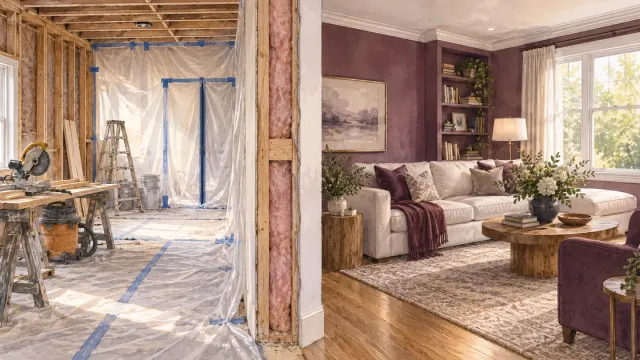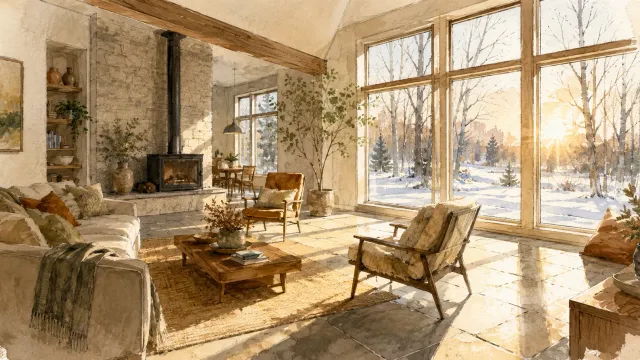
Eco-friendly home features have moved from a niche selling point to a mainstream expectation. ENERGY STAR data shows that qualifying home upgrades typically cut household energy costs by 10 to 30 percent — a figure that lands differently in Minnesota, where heating alone runs several hundred dollars a month through the winter. Add the resale consideration — energy-efficient features consistently rank among what buyers ask for — and the case for building these upgrades into your next remodel becomes straightforward.
Below are six eco-friendly remodel ideas worth considering, from material choices to mechanical systems, with notes on where they make the most sense for South Metro homes.
The Financial and Environmental Case
The two arguments for eco-friendly upgrades reinforce each other. Sustainable features reduce operating costs month over month. They often carry lower long-term maintenance burden than conventional alternatives. And because they align with what a growing share of buyers actively look for, they tend to hold their value better than trend-driven choices that date quickly.
Environmentally, the math is direct: lower energy consumption means fewer greenhouse gas emissions, and choosing materials from renewable or recycled sources reduces the extraction burden on raw materials. In a climate with real heating demand like Minnesota's, anything that improves a home's thermal envelope or mechanical efficiency contributes meaningfully to both the carbon math and the monthly bill.
Six Eco-Friendly Upgrades Worth Building In
1. Upcycled Countertop Materials
Upcycled countertop materials — recycled glass, reclaimed wood, composite surfaces made from post-industrial content — are now reliable enough for everyday kitchen and bathroom use, and each reads differently from standard countertop options.
The sustainability case is real: upcycled surfaces reduce landfill volume and typically require less energy to produce than quarried stone or newly milled lumber. The design case is equally strong. Recycled glass aggregate catches light in ways solid stone doesn't. Reclaimed wood carries the grain variation and character that new material can't replicate. In a kitchen remodel, countertop material is one of the highest-impact visual decisions in the room — choosing something that earns a second look while keeping waste out of a landfill is a reasonable combination.
2. Energy-Efficient Appliances
Switching to ENERGY STAR-certified appliances — particularly induction cooktops — is one of the most direct ways to reduce a home's energy consumption.
- Energy conservation — Induction cooktops use electromagnetic fields to heat the pan directly, transferring significantly more of the energy input into actual cooking compared to gas or conventional electric. ENERGY STAR-certified refrigerators, dishwashers, and HVAC equipment follow the same principle: more useful output, less wasted heat.
- Practical benefits — Lower monthly utility bills, longer product lifespans, and in many cases rebate eligibility through Xcel Energy or CenterPoint Energy's Minnesota efficiency programs — making the upfront cost gap narrower than the sticker price suggests.
3. Radiant Floor Heating
Radiant floor heating — either hydronic (water-circulated through tubing in the subfloor) or electric resistance mat — delivers warmth from the ground up, which is how thermal comfort actually works. Warm feet read as a warm room even when air temperature is a few degrees lower than a forced-air system would need to feel equivalent.
In Minnesota, that efficiency has real implications. Radiant systems distribute heat more evenly than ductwork, eliminate the drafts and temperature stratification common in forced-air setups, and operate without the noise of a blower. The tradeoff is installation complexity and cost — integrating a hydronic system into an existing home requires coordination with a boiler or water heater and careful subfloor planning. For a full bathroom remodel or a room addition, it's a natural inclusion; for a retrofit in a finished space, an electric mat under new tile is often the more practical path.
4. Biophilic Design Elements
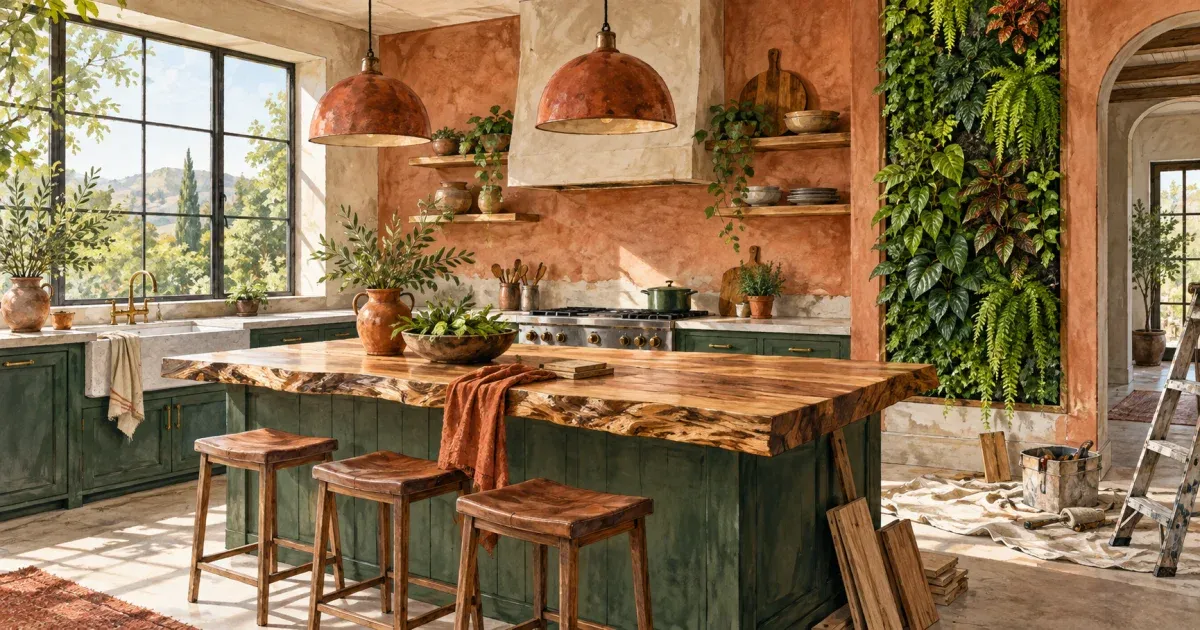
Biophilic design brings natural elements — plants, natural light, organic textures — into the built environment in ways that support well-being and reduce the cognitive flatness of fully synthetic spaces. In a whole-home remodel, this shows up as living plant walls, expanded window area, or natural material choices for flooring and finishes.
- Living walls — Vertical plant installations improve indoor air quality by filtering particulates and increasing oxygen levels in enclosed rooms, particularly useful in Minnesota homes that run sealed tight through winter.
- Well-being — Environmental psychology research consistently links daily exposure to natural elements with measurable reductions in stress and improved mood — which is a real argument for design choices that might otherwise read as purely decorative.
5. Natural Clay Plaster Walls
Natural clay plaster is a wall finish with functional advantages that extend well beyond its appearance. Clay is highly hygroscopic — it absorbs moisture from the air when humidity rises and releases it slowly when conditions dry out, moderating indoor humidity without mechanical help.
- Health benefits — Clay walls don't off-gas volatile organic compounds (VOCs), unlike many conventional paints and synthetic finishes. In a newly remodeled space that stays sealed through a Minnesota winter, that matters for air quality during the months when the house doesn't breathe naturally.
- Sustainability — Clay is abundant, fully biodegradable, and provides thermal mass that moderates indoor temperature swings. Anything that reduces the heating and cooling load in a South Metro home contributes to annual energy costs in a measurable way.
6. Low-Flow Water Fixtures
Modern low-flow toilets, showerheads, and faucets reduce water consumption without a noticeable drop in performance — the engineering has caught up with the efficiency target, and current fixtures maintain adequate pressure while using significantly less water per use than hardware from even ten years ago.
- Functionality — Low-flow fixtures are now standard in most quality remodels, not an upgrade. The performance gap that made early versions unpopular has largely closed.
- Cost and environmental savings — Lower water bills and reduced demand on municipal supply infrastructure. Water conservation is worth doing on basic waste-reduction grounds — using less of a resource you pay for has straightforward economics regardless of regional water stress.
Planning an Eco-Friendly Remodel in the South Metro
Sustainable features cost the least when they're part of the original design conversation, not added after the fact. If you're planning a kitchen, bathroom, or whole-home project in the Twin Cities South Metro, reach out to us and we can talk through which of these upgrades fit your space, your budget, and what you're trying to accomplish long-term.